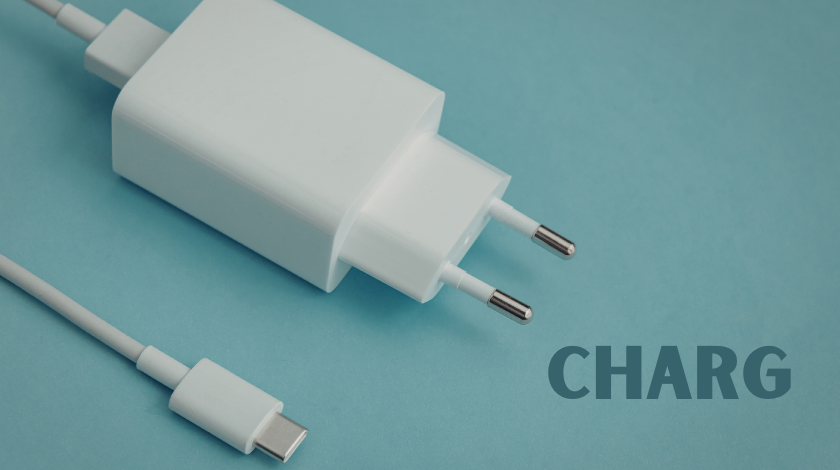
The Power Revolution: A Complete Guide to Charging Everything in Your Life
We have all been there. You are about to leave for a long flight or a road trip, and you look down to see that dreaded red icon on your screen. Your phone is at 4 percent. A decade ago, that meant you were simply out of luck. But today, we live in an era where “charging” is not just a chore. It is a sophisticated dance of chemistry, physics, and hardware. Whether you are plugging in a tiny pair of earbuds or a three-ton electric truck, the principles remain the same. Yet, the technology is advancing faster than most of us can keep up.
I remember my first cell phone. It had a charger that felt like a literal brick. It took four hours to get a full charge, and the battery barely lasted a day. Fast forward to now, and I can plug my phone in for fifteen minutes and get enough juice to last until the evening. This shift did not happen by accident. It happened because we changed the way we think about moving energy from a wall outlet into a chemical battery. In this guide, I want to break down exactly what is happening when you “charge” your gear, why some chargers are better than others, and how you can stop killing your batteries prematurely.
The Magic of Fast Charging and GaN Technology
If you have bought a new charger recently, you might have noticed the term “GaN” printed on the box. It stands for Gallium Nitride. For decades, chargers used silicon-based components. Silicon is great, but it gets very hot when you push a lot of electricity through it. This is why old laptop chargers were huge. They needed space to dissipate that heat so they would not melt. GaN is a game-changer because it is much more efficient than silicon. It conducts electricity faster and loses less energy to heat. This allows manufacturers to cram 65 watts or even 100 watts of power into a plug the size of a golf ball.
I personally switched all my travel adapters to GaN versions last year. It changed everything for me. I no longer carry a separate laptop charger, a phone charger, and a tablet charger. One tiny GaN block with three USB-C ports handles it all. When we talk about “Fast Charging,” we usually mean the USB Power Delivery (USB-PD) protocol. This is a smart system where the phone and the charger actually talk to each other. The phone says, “I can handle 30 watts right now,” and the charger agrees. As the battery gets fuller and hotter, the phone will tell the charger to slow down. This is why your phone charges really fast from 0 to 50 percent, but takes forever to go from 90 to 100 percent. It is a safety feature to prevent your battery from exploding or degrading.
Wireless Charging: Is It Actually Better?
Wireless charging feels like magic. You set your phone down on a pad, and it just starts glowing. Most modern wireless charging uses the “Qi” standard, which works through induction. There is a coil of wire in the pad and another in your phone. When they get close, an electromagnetic field transfers energy between them. Apple took this a step further with MagSafe, adding magnets to make sure those coils align perfectly every time.
However, wireless charging is a double-edged sword. While it is convenient, it is not very efficient. A lot of energy is lost as heat. If you have ever picked up your phone from a wireless pad and noticed it felt hot, that is a sign of wasted energy. Heat is the number one enemy of battery health. If you keep their phone for 4 or 5 years, use a cable for your primary charging. Use wireless charging for convenience on your desk, but do not rely on it exclusively to keep your battery healthy in the long run.
The Big Leap: Charging Electric Vehicles
Moving from phones to cars is a massive jump in scale, but the anxiety is the same. People often ask me if they can really rely on an EV for long trips. The answer depends entirely on the charging infrastructure. EV charging is divided into “Levels.” Level 1 is just plugging your car into a standard wall outlet. It is painfully slow, adding 3-5 miles of range per hour. It is like trying to fill a swimming pool with a squirt gun.
Level 2 is what most people install in their garages. It uses a 240-volt outlet, similar to what your clothes dryer uses. This can fully charge a car overnight. Then there is Level 3, also known as DC Fast Charging. These are the big stations you see at rest stops. They skip the car’s internal converter and pump high-voltage direct current straight into the battery. A good DC fast charger can get an EV from 10 percent to 80 percent in about 20 minutes. My experience with these has been mostly positive, but the “broken charger” syndrome is real. Unlike gas pumps, which almost always work, public EV chargers can be finicky. This is why the industry is moving toward a single standard (like Tesla’s NACS plug) to make things more reliable for everyone.
Why Battery Health is a Personal Responsibility
We often blame manufacturers when our devices stop holding a charge, but we often contribute to the problem ourselves. Lithium-ion batteries, which power almost everything we own, are like living things. They do not like being “stressed.” Stress for a battery means being at 100 percent for too long or being at 0 percent for too long. They are happiest when they are sitting somewhere between 20 percent and 80 percent.
I have a habit of unplugging my laptop once it hits 80 percent if I am sitting at my desk. Many modern devices now have “Optimized Battery Charging” settings that do this for you. They learn your routine and wait to finish the last 20 percent of the charge until just before you usually wake up. Another tip is to avoid “fast charging” when you don’t need to. If you are charging your phone overnight while you sleep, you do not need a 100-watt ultra-fast charger. A slow, old-school 5-watt charger is actually better for the battery because it generates almost no heat. It is like the difference between a sprint and a steady walk. Both get you to the finish line, but one is much harder on your body.
The Future of Charging: What is Next?
Looking ahead, the world of charging is about to get even crazier. We are seeing the rise of “Solid-State Batteries.” These use a solid electrolyte rather than the liquid electrolyte used in current batteries. This means they can charge much faster, hold more energy, and do not catch fire if damaged. Imagine a car that charges in five minutes and has a range of 700 miles. That is the promise of solid-state tech.
We are also seeing early experiments with “Over-the-Air” wireless charging. This is not like a Qi pad, where the device has to be in contact with the charger. Instead, it uses specialized radio waves to charge your phone while it is in your pocket, as long as you are in the room. It sounds like science fiction, but the prototypes already exist. Soon, the idea of “plugging something in” might feel as ancient as rotary phones.
Conclusion
Charging is the heartbeat of our modern world. From the tiny GaN chargers in our pockets to the massive DC stations on our highways, we are constantly looking for faster, safer, and more efficient ways to move power. By understanding the technology, choosing the right hardware, and practicing good battery habits, you can ensure that your devices stay powered up and last for years to come. Technology is always changing, but the goal remains the same: staying connected without being tethered to a wall.
Frequently Asked Questions (FAQ)
Q: Does fast charging ruin my phone battery?
A: Not necessarily. Modern phones have built-in management systems that slow charging speed as the battery approaches full or becomes hot. However, the heat generated by fast charging can cause slightly faster degradation over several years compared to slow charging.
Q: Can I use my laptop charger to charge my phone?
A: Yes, as long as both use USB-C and support the Power Delivery (PD) standard. The charger and the phone will communicate to ensure the phone receives only the power it can safely handle.
Q: Why does my EV charge more slowly in the winter?
A: Battery chemistry relies on chemical reactions that slow down in cold temperatures. Most EVs have to spend energy heating the battery pack before it can accept a fast charge, which results in slower speeds during the winter months.
Q: Is it okay to leave my phone plugged in overnight?
A: Most modern smartphones are smart enough to stop drawing power once they reach 100 percent. However, keeping a battery at 100 percent for extended periods can cause “voltage stress.” It is better to use your phone’s “Optimized Charging” feature to manage this.
About the Author